

Custom Application Development

Custom application development at SDVS focuses on building systems that support long-term business operations, data integrity, and automation readiness. We design applications that integrate seamlessly into enterprise environments while remaining adaptable to evolving business and technology demands.

  • Home
  • Custom Application Development
Building a Custom Application

Modern Custom Applications Are Built to Automate, Integrate, and Adapt

Today’s custom applications are no longer built just to digitize processes. They are expected to orchestrate workflows, reduce manual intervention, and support intelligent decision-making across complex enterprise environments. At SDVS, custom application development focuses on building systems that integrate with future AI and machine-learning capabilities.

Why Modern Custom Applications Demand Structured Consulting, Not Just Development

Custom application development today extends far beyond technical implementation. SDVS, structured consulting ensures applications are designed with operational realities in mind – balancing business objectives, system dependencies, data flows, and future AI and automation requirements before development begins.

Application Readiness and Automation Risk Assessment
Modern applications operate across interconnected systems. We evaluate process maturity, automation readiness, data dependencies, and integration risk early – reducing rework and ensuring applications can support automated workflows and intelligent operations without destabilizing existing systems.
Architecture and Integration Governance
Custom applications must coexist with enterprise platforms, APIs, and data ecosystems. We define modular architectures, integration boundaries, data ownership models, and security controls that support scalability, automation expansion, and AI enablement over time.
Disciplined Development and Controlled Execution
Execution quality determines whether applications become assets or liabilities. Development is managed through structured validation, environment controls, and release governance – ensuring predictable behavior, operational stability, and compliance from initial rollout onward.
Post-Deployment Stability and Intelligent Evolution
Application value is realized after deployment. We support stabilization, performance tuning, and progressive enhancements – allowing applications to evolve with business changes, automation initiatives, and emerging intelligence requirements rather than becoming rigid constraints.

Our Commitment

Applications Designed for Automation and Change
We design custom applications to operate within evolving enterprise environments—supporting automation, system changes, and new integrations without constant rework.
Architected for Integration, Data, and AI Readiness
Every application is built with clear integration boundaries, structured data models, and extensible architectures. This ensures systems can support analytics, automation expansion, and AI adoption.
Engineering Discipline for Enterprise-Scale Systems
Our teams apply engineering rigor suited for ERP-adjacent and mission-critical environments. From architecture validation to release governance.
OUR APPROACH

How We Design Custom Applications for Automation, Intelligence, and Enterprise Scale

Modern enterprise applications are no longer built as isolated systems. They operate within interconnected platforms, automate cross-functional workflows, and generate data that fuels analytics and AI-driven decision making. SDVS approaches custom application development by designing systems that reduce operational risk, support automation initiatives, and remain adaptable.

How We Design Custom Applications for Automation

Application Strategy, Automation Mapping, and AI Readiness

Before design begins, we analyze how work actually moves across systems. This includes identifying manual handoffs, future AI enablement, integration bottlenecks, data dependencies, and automation opportunities.

Architecture Designed for Integration and Intelligent Workflows

We design modular, API-first architectures that integrate cleanly with ERP platforms and enterprise systems. Event-driven workflows enable automation across functions, with predictive insights, and AI services without re-engineering.

Engineering Execution with Stability and Evolution in Mind

Development is executed with disciplined validation, security controls, and release governance. Systems are built to remain stable under operational load while allowing incremental enhancements, automation expansion, and intelligence layers to be introduced over time.

HOW IT WORKS

A Modern Development Lifecycle for Intelligent Enterprise Applications

Applications are living systems that automate work, integrate continuously, and evolve alongside enterprise platforms, data strategies, and intelligence initiatives. SDVS follows a development lifecycle designed to support automation readiness, data intelligence, and long-term system accountability.

1
Step 1. Process Intelligence & Automation Discovery
Before defining features, we analyze how work actually flows across systems. This includes identifying manual decision points, repetitive operational tasks, integration dependencies, and areas where automation or intelligence can reduce friction.
2
Step 2. Architecture for Integration, Data, and AI Evolution
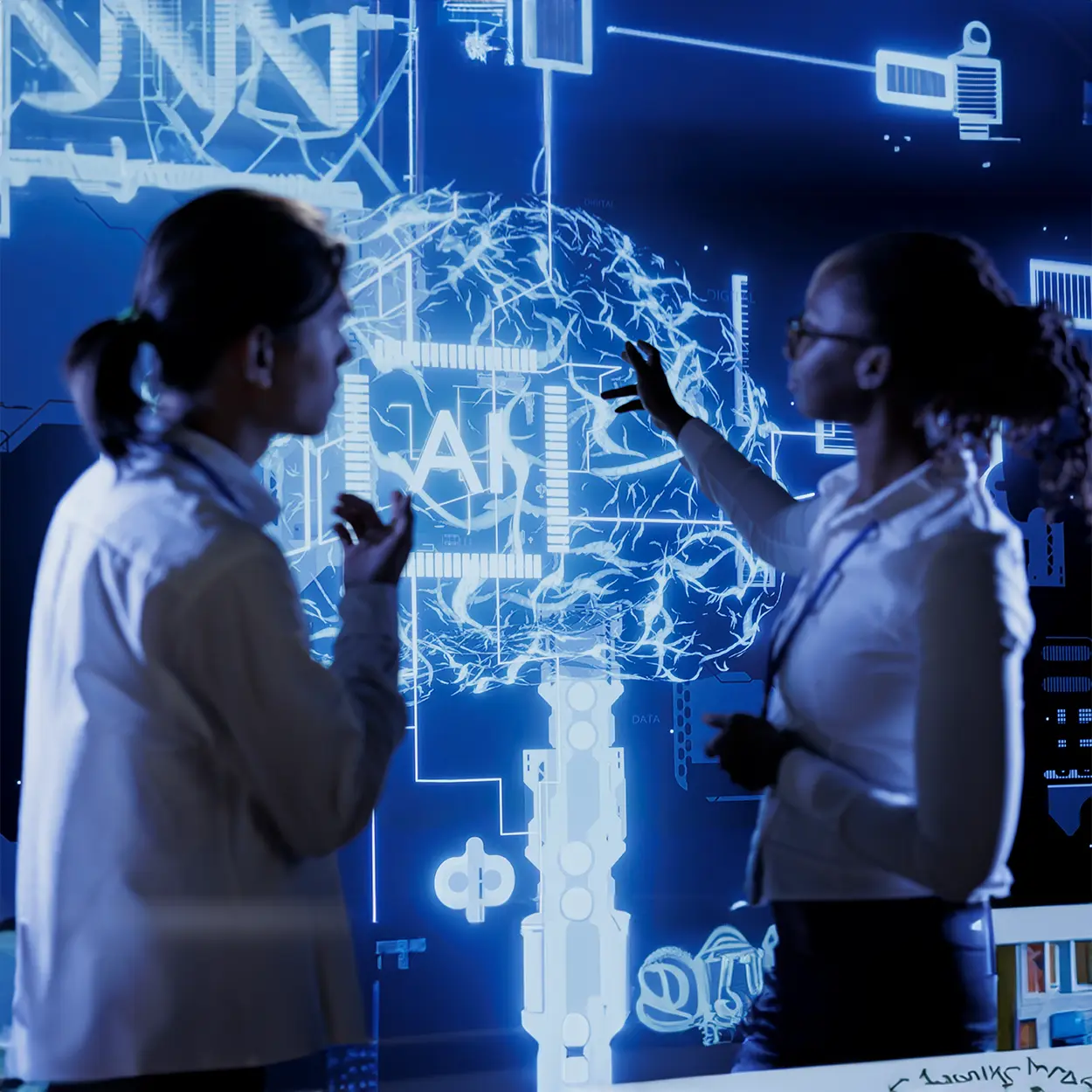
Architecture is where long-term success is determined. We design modular, API-driven systems that coexist with ERP platforms and enterprise tools while enabling event-driven automation and structured data pipelines.
3
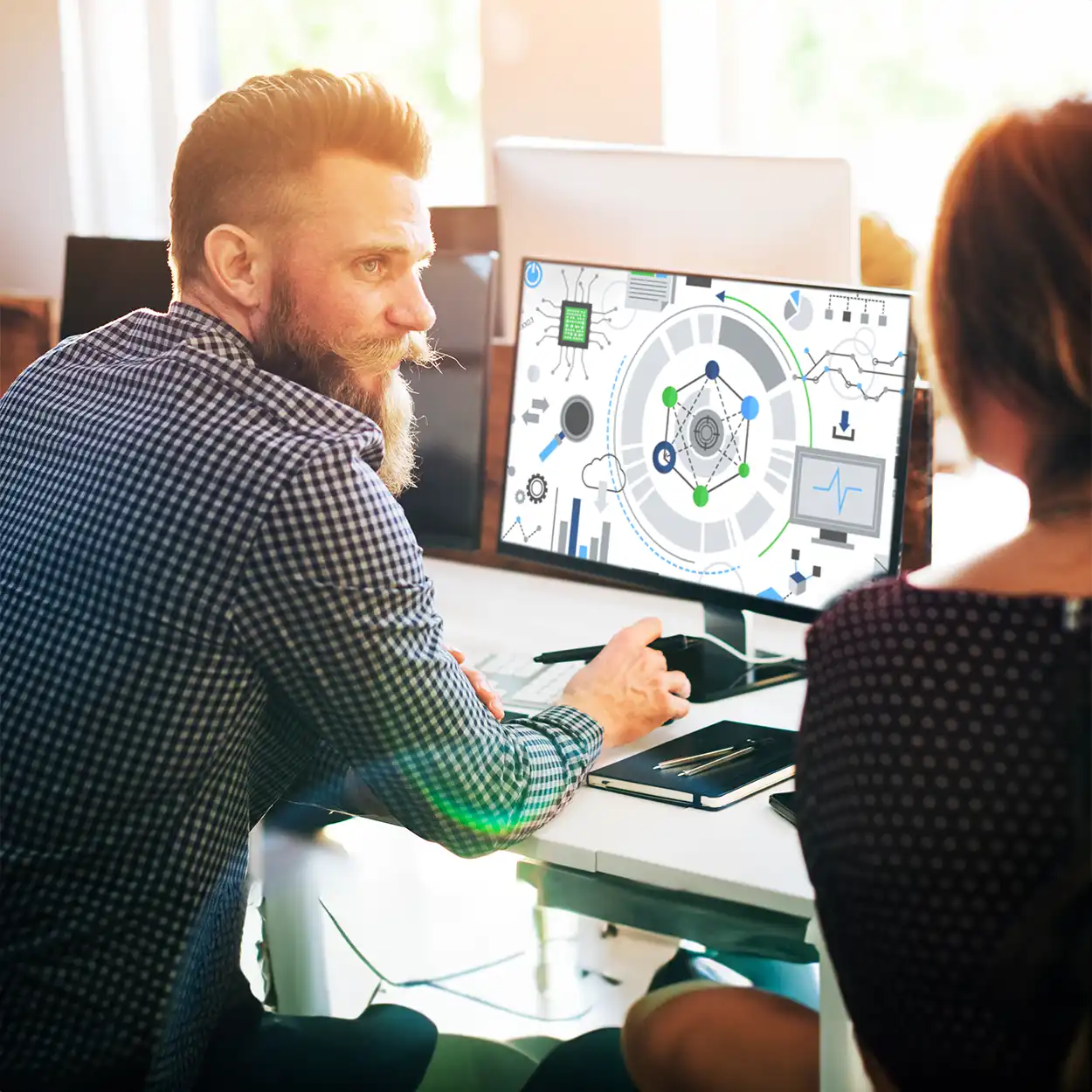
Step 3. Controlled Engineering with Continuous Validation
Development is executed with continuous validation against operational behavior—not just functional completeness. We prioritize stability under load, predictable system behavior, and secure execution across environments.
4
Step 4. Stabilization, Automation Expansion, and System Ownership
Post-deployment is where applications either mature or become liabilities. SDVS remains engaged to stabilize performance, expand automation capabilities, and introduce intelligence layers as business needs evolve.

FAQs

What makes modern custom application development different today?
Modern custom application development focuses on automation, system integration, and long-term adaptability rather than just building features. Applications are designed to orchestrate workflows, integrate with enterprise platforms, and generate structured data that supports analytics and future AI enablement, ensuring they remain valuable as business and technology needs evolve.
How do custom applications support automation in enterprise environments?
Custom applications support automation by using event-driven workflows, rule-based processing, and system-to-system integrations. Instead of relying on manual handoffs, applications trigger actions automatically across platforms such as ERP, CRM, and operational systems, reducing delays, errors, and operational dependency on human intervention.
Can custom applications be built to support AI and machine learning later?
Yes. Custom applications can be designed with AI readiness by structuring data models, integration layers, and processing logic to support analytics and machine learning. While AI may not be implemented initially, these foundations allow organizations to introduce predictive insights, anomaly detection, and intelligent automation without redesigning the application architecture.
How do custom applications integrate with ERP systems like SAP or Oracle?
Custom applications integrate with ERP systems through well-defined APIs, middleware, and secure data exchange layers. Rather than replacing ERP platforms, they extend functionality, automate cross-system workflows, and handle specialized business logic while preserving ERP stability, governance, and upgrade paths.
Why is architecture so critical in custom application development?
Architecture determines whether a custom application becomes a long-term asset or a future liability. A well-designed architecture supports scalability, integration, automation, expansion, and security. Poor architectural decisions often lead to fragile systems that are expensive to modify, difficult to integrate, and risky to operate in enterprise environments.
What happens after a custom application goes live?
After go-live, successful custom applications require stabilization, monitoring, and continuous evolution. This includes performance tuning, automation enhancement, security updates, and adapting to business changes. Ongoing ownership ensures applications remain reliable, scalable, and aligned with enterprise operations rather than becoming outdated or operational bottlenecks.

SDVS Technologies delivers expert SAP consulting, software development, and IT training to help organizations reimagine how they operate, compete, and grow.

200 Gerault Road, Suite #700
Flower Mound, TX 75028
United States
Call: +1 469-666-9960
Mon - Fri 10am - 06pm